3.3.1.102. NXguide
Status:
base class, extends NXcomponent
Description:
A neutron optical element to direct the path of the beam. …
A neutron optical element to direct the path of the beam.
NXguide is used by neutron instruments to describe a guide consists of several mirrors building a shape through which neutrons can be guided or directed. The simplest such form is box shaped although elliptical guides are gaining in popularity. The individual parts of a guide usually have common characteristics but there are cases where they are different. For example, a neutron guide might consist of 2 or 4 coated walls or a supermirror bender with multiple, coated vanes.
To describe polarizing supermirrors such as used in neutron reflection, it may be necessary to revise this definition of NXguide to include NXpolarizer and/or NXmirror.
When even greater complexity exists in the definition of what constitutes a guide, it has been suggested that NXguide be redefined as a NXcollection of NXmirror each having their own NXgeometry describing their location(s).
For the more general case when describing mirrors, consider using NXmirror.
NOTE: The NeXus International Advisory Committee welcomes comments for revision and improvement of this definition of NXguide.
Symbols:
nsurf: number of reflecting surfaces
nwl: number of wavelengths
- Groups cited:
Structure:
GEOMETRY: (optional) NXgeometry
DEPRECATED: Use the field depends_on and NXtransformations to position the guid and NXoff_geometry to describe its shape instead
TODO: Explain what this NXgeometry group means. What is intended here?
description: (optional) NX_CHAR ⤆
A description of this particular instance of
NXguide.incident_angle: (optional) NX_FLOAT {units=NX_ANGLE}
TODO: documentation needed
reflectivity: (optional) NXdata ⤆
Reflectivity as function of reflecting surface and wavelength
Obligatory value:
dataObligatory value:
surface wavelength@surface_indices: (optional) NX_CHAR
Obligatory value:
0@wavelength_indices: (optional) NX_CHAR
Obligatory value:
1data: (optional) NX_NUMBER (Rank: 2, Dimensions: [nsurf, nwl]) ⤆
reflectivity of each surface as a function of wavelength
surface: (optional) NX_NUMBER (Rank: 1, Dimensions: [nsurf]) {units=NX_ANY}
List of surfaces. Probably best to use index …
List of surfaces. Probably best to use index numbers but the specification is very loose.
wavelength: (optional) NX_NUMBER (Rank: 1, Dimensions: [nwl]) {units=NX_WAVELENGTH} ⤆
wavelengths at which reflectivity was measured
bend_angle_x: (optional) NX_FLOAT {units=NX_ANGLE}
TODO: documentation needed
bend_angle_y: (optional) NX_FLOAT {units=NX_ANGLE}
TODO: documentation needed
interior_atmosphere: (optional) NX_CHAR
Any of these values:
vacuum|helium|argonexternal_material: (optional) NX_CHAR
external material outside substrate
m_value: (optional) NX_FLOAT (Rank: 1, Dimensions: [nsurf])
The
mvalue for a supermirror, which defines the supermirror …The
mvalue for a supermirror, which defines the supermirror regime in multiples of the critical angle of Nickel.substrate_material: (optional) NX_FLOAT (Rank: 1, Dimensions: [nsurf])
TODO: documentation needed
substrate_thickness: (optional) NX_FLOAT (Rank: 1, Dimensions: [nsurf]) {units=NX_LENGTH}
TODO: documentation needed
coating_material: (optional) NX_FLOAT (Rank: 1, Dimensions: [nsurf])
TODO: documentation needed
substrate_roughness: (optional) NX_FLOAT (Rank: 1, Dimensions: [nsurf]) {units=NX_LENGTH}
TODO: documentation needed
coating_roughness: (optional) NX_FLOAT (Rank: 1, Dimensions: [nsurf]) {units=NX_LENGTH}
TODO: documentation needed
number_sections: (optional) NX_INT {units=NX_UNITLESS}
number of substrate sections (also called
nsurfas an …number of substrate sections (also called
nsurfas an index in theNXguidespecification)OFF_GEOMETRY: (optional) NXoff_geometry
This group describes the shape of the beam line component
depends_on: (optional) NX_CHAR ⤆
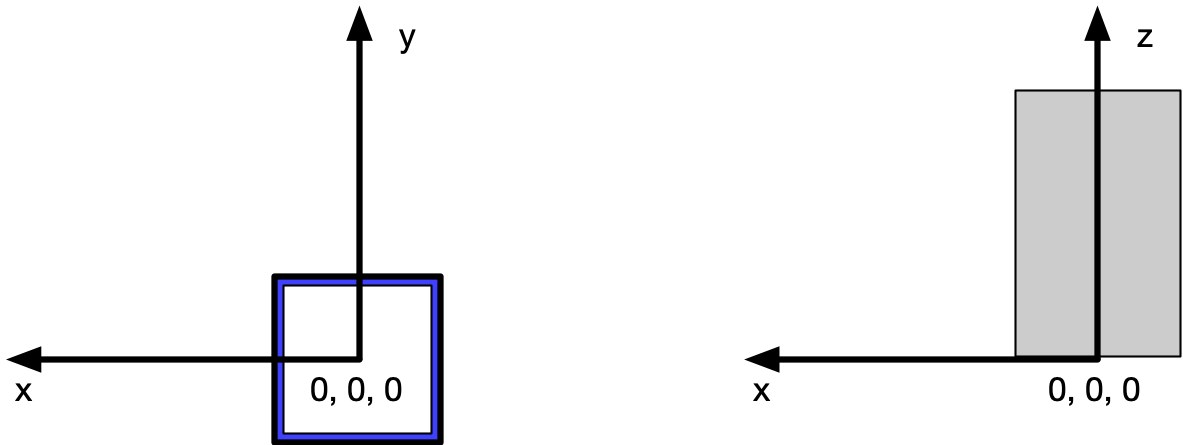
The entry opening of the guide lies on the reference plane. The center of the …
The entry opening of the guide lies on the reference plane. The center of the opening on that plane is the reference point on the x and y axis. The reference plane is orthogonal to the z axis and is the reference point along the z axis. Given no bend in the guide, it is parallel with z axis and extends in the positive direction of the z axis.
Hypertext Anchors
List of hypertext anchors for all groups, fields, attributes, links, and symbols defined in this class.